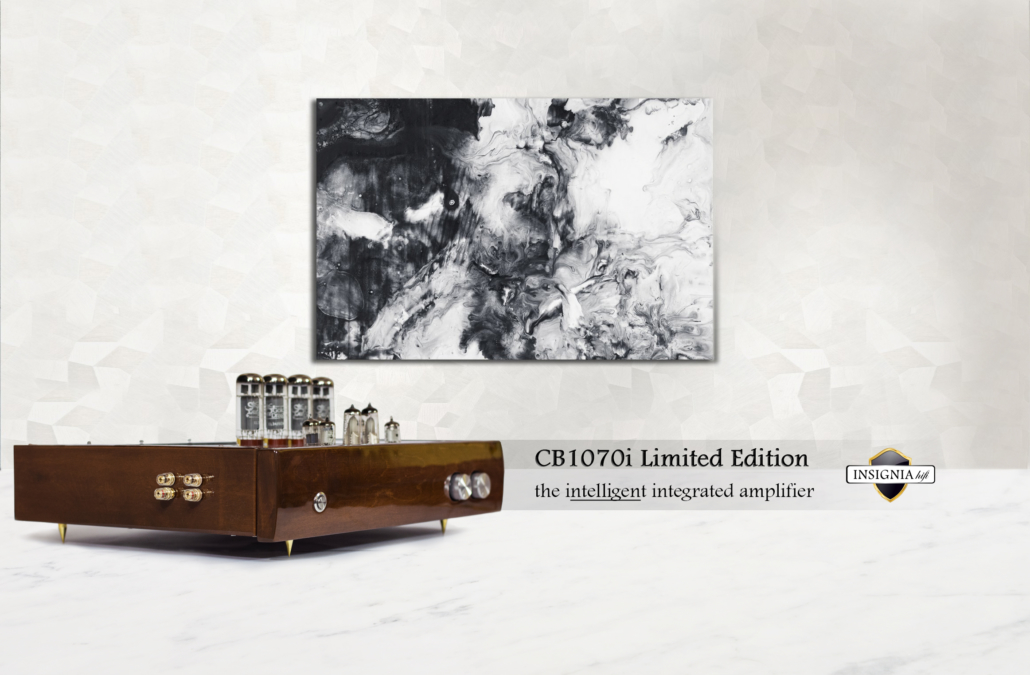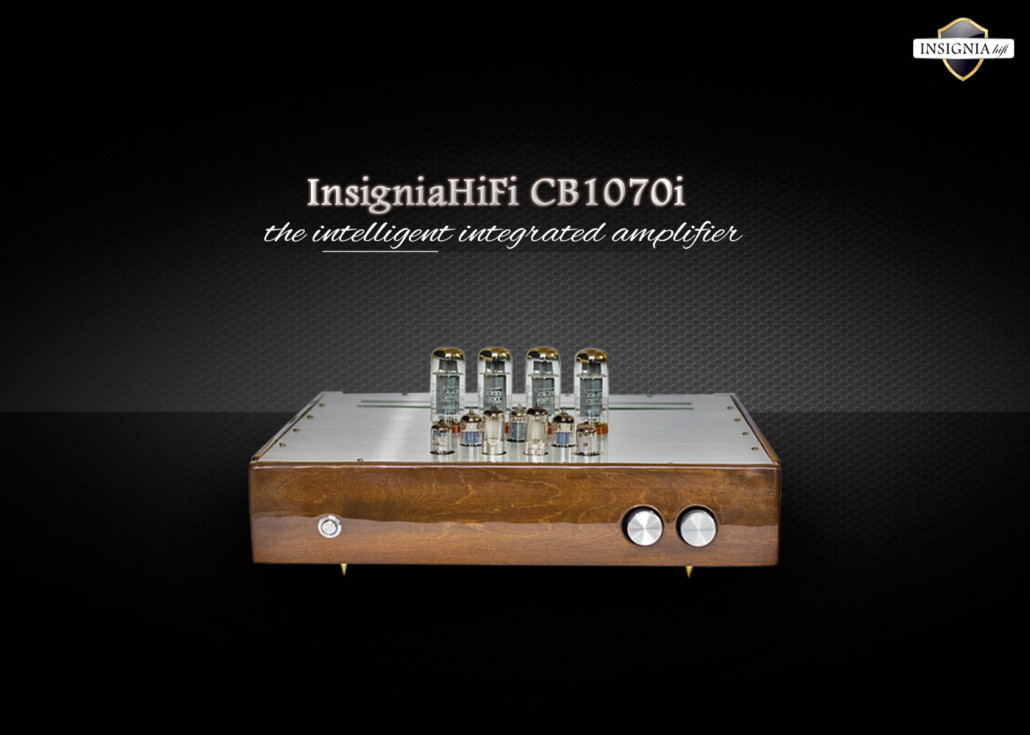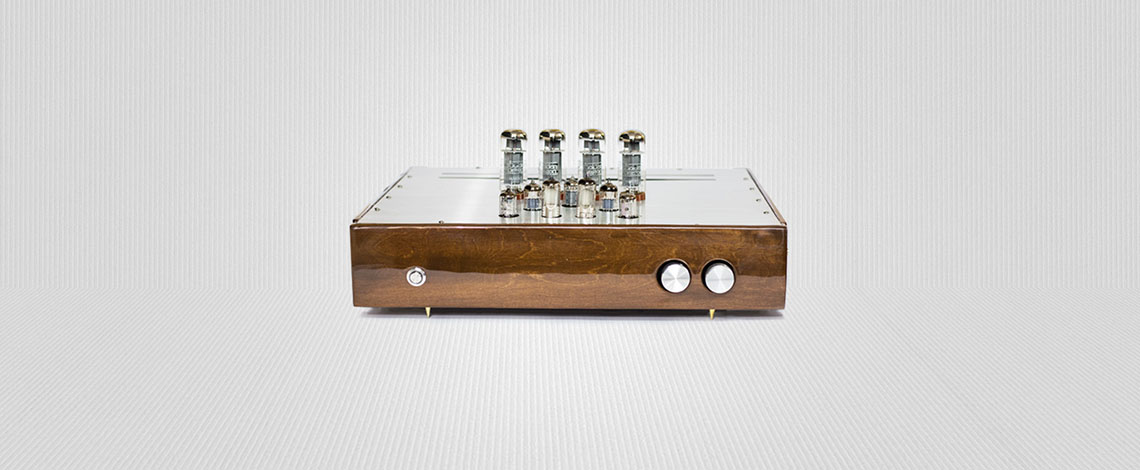
The CB1070i is the centrepiece of the workshop — the project I kept refining for four years before I let one out of the door. It is an integrated valve amplifier in the strict sense: the preamp stage lives in the same chassis as the power amp, so the system does without a second box and the cables that connect it. Fewer cables, fewer connectors, fewer compromises.
The design brief
Build a push-pull amplifier good enough to be the backbone of a serious music system and good enough to master to. The two roles are usually treated as separate — hi-fi prizes warmth and forgiveness, mastering prizes ruthlessness — but I wanted one box that did both.
The answer was a fundamentalist approach: keep the signal path obsessively short, use only components I could justify on first principles, and let the topology be as boring as possible (push-pull Class AB, ultra-linear) so the parts could do the talking.
Five components in the signal path
The number is exact and deliberate. Everything in the signal path is space-grade: precision resistors meeting or exceeding MIL-PRF-26 / MIL-STD-202, non-magnetic non-inductive cathode resistors wound Ayrton-Perry style, and shielded PTFE-insulated signal cable point-to-point.
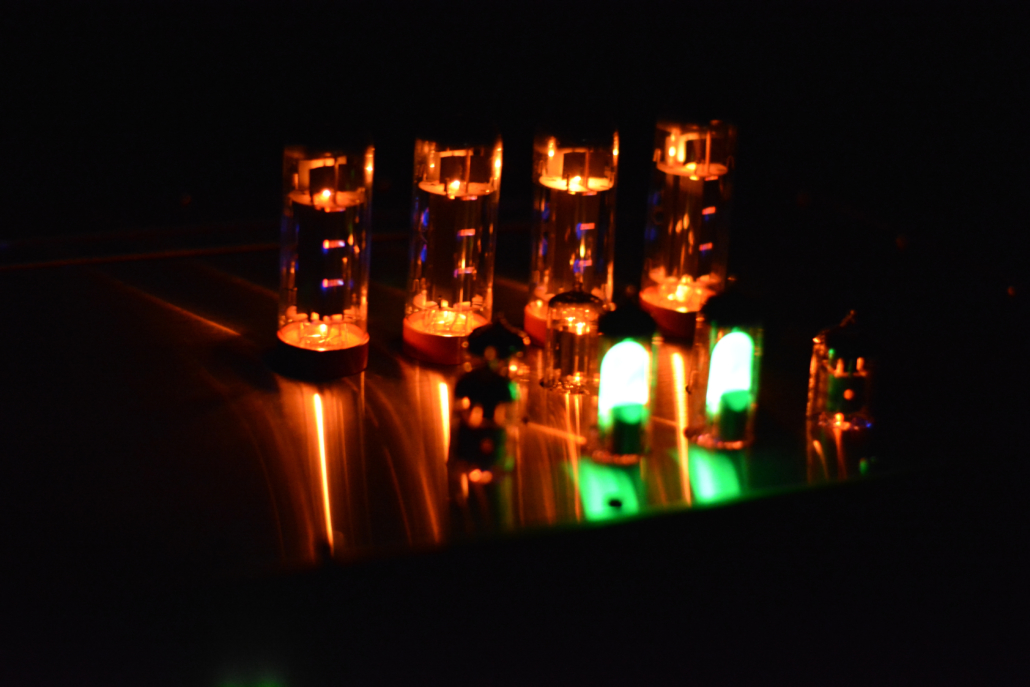
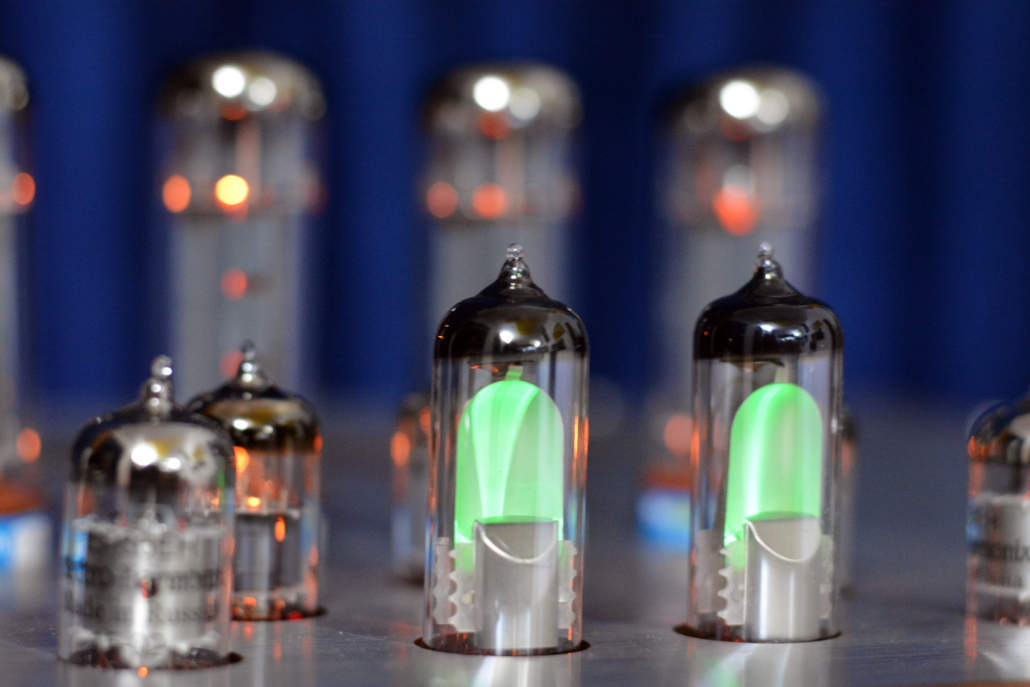
The input stage is an EF86 pentode — chosen for its quiet, controlled midrange and for the optional cathode-follower buffer that lets the amp sit happily after almost any source. The phase splitter is an ECC83. The output is a matched quad of EL34s, hand-selected, cryogenically treated, and biased by a servo that tracks each tube as it ages so the operating point never drifts.
That servo is the one piece of solid-state intelligence I allowed into the amp, and it earns its place: it removes the single biggest cause of mediocre tube sound — cold or drifted bias — without injecting itself into the signal.
The transformers
Two large toroidal output transformers and a separate toroidal heater supply. Toroidal rather than EI for the lower stray field; separate heater supply so heater hum can't ride the signal rails. The bandwidth runs well beyond the audible range, which matters because transient response inside the audio band is set by what happens outside it.
The chassis
Hand-finished teak with a stainless steel top plate. Wood is acoustically dead in the resonance bands tubes care about; stainless is non-magnetic. Vibration-damping spike feet decouple the amp from the rack. None of this is decoration.
What it sounds like
Soundstage depth that is almost discomfiting on a good recording — instruments arrive at distinct distances rather than draped across a flat plane. Bass that is fast rather than fat. Vocal midrange that reveals breath and tongue without becoming clinical.
The lineage
The project was developed in conversation with Claus Byrith in Denmark — a generous mentor and one of the finest living refiners of the classic Mullard topology. Three prototypes were built and lived on the bench for four years before one became the production unit. The amplifier was the flagship of Insignia Hi-Fi Audio Labs, the company I ran around it.